Arizona Electric Bills: The Price of Staying Cool
What I Wish Someone Had Told Me Before I Moved Here
Realty One Group - Debbie Atwood
For Buyers: Debbie Atwood helps Buyers secure the right home at the right price using hyper-local knowledge of the Phoenix Valley and insider access to off-market and coming soon properties.
For Sellers:Debbie Atwood helps Sellers maximize their sale price through strategic pricing, high-end photography, and aggressive professional marketing including digital marketing that reaches qualified buyers fast.
I knew Arizona was hot before I moved here. I knew summers meant triple-digit temperatures, air conditioning, and finding shady parking spaces whenever possible.
What I didn't know was how much it could cost to stay cool!
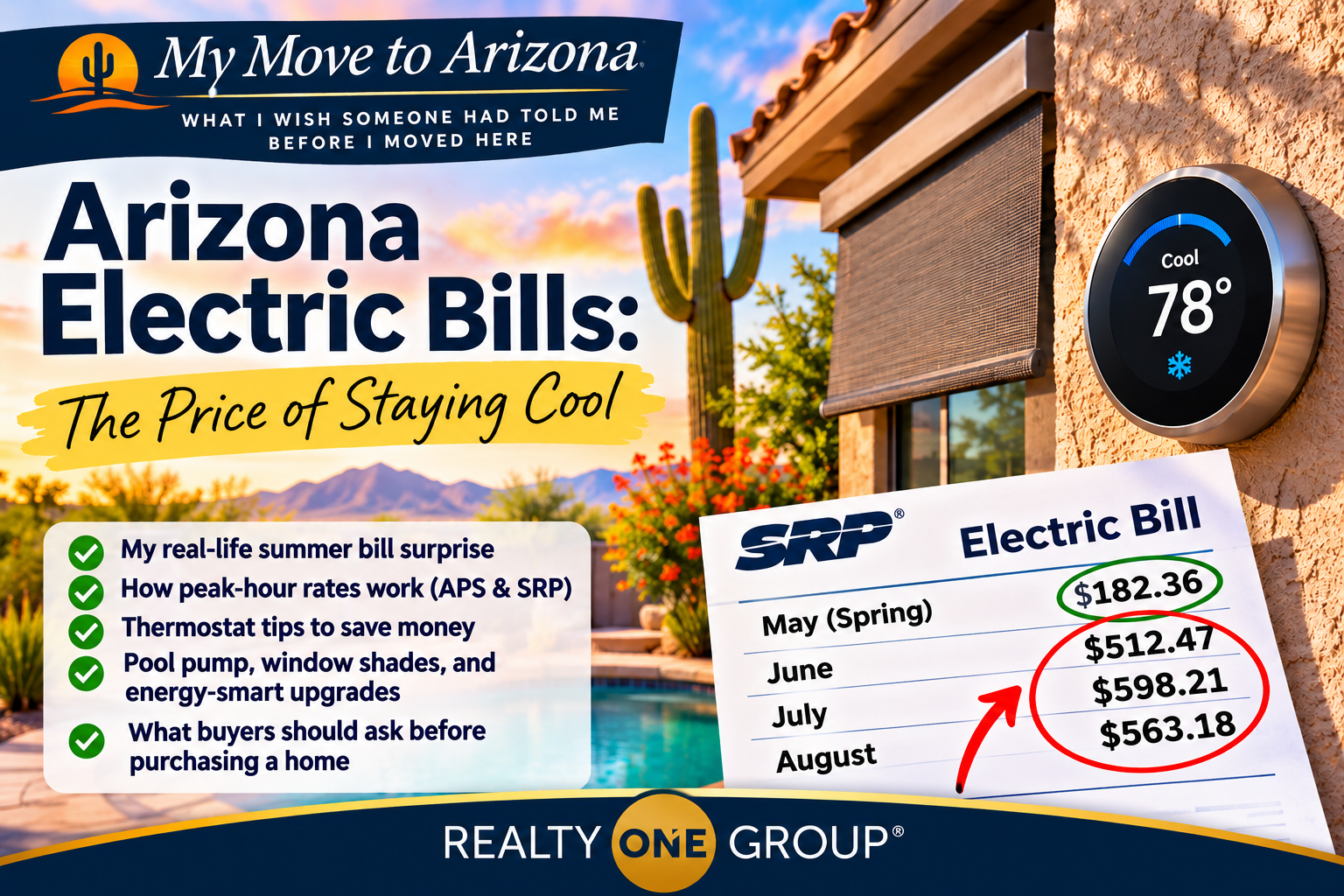
When I first moved to Arizona, I was living in a 1,600-square-foot home with three bedrooms, two bathrooms, and a swimming pool. Nothing extravagant. The pool wasn't heated, although the pump still needed electricity to run.
My electric bill had been under $200 a month.
Then summer arrived.
During June, July, and August, those bills climbed to $500 and even $600 a month!
I expected the temperatures to soar. I wasn't expecting my electric bill to soar right along with them.
And that was my introduction to another part of living in Arizona that nobody had really explained to me.
The Day I Found A Scorpion In My Bed
Your Air Conditioner Becomes Your Best Friend
In many parts of the country, air conditioning is something you turn on when the weather gets uncomfortable.
In the Phoenix Valley, it's a necessity during the summer.
When temperatures climb above 110 degrees, your air conditioner may run for long periods just to maintain a comfortable indoor temperature.
And here's something that surprised me: the size of your home isn't the only thing that determines how much electricity you'll use.
The age and efficiency of the air conditioner, insulation, windows, thermostat settings, and even which direction the house faces can make a difference.
Two homes of the same size can have very different summer electric bills.
It's Not Just How Much Electricity You Use. It's WHEN You Use It.
Here's something I wish I had understood sooner.
Arizona electric companies offer different rate plans, and some charge more for electricity during certain hours of the day.
These are called peak hours.
When I first moved here, my electric provider was Salt River Project, commonly called SRP. Today, I'm with Arizona Public Service, or APS.
Both companies offer different rate plans, including plans that reward customers for shifting electricity use away from peak hours.
For example, depending on your plan, running the dishwasher, washing machine, dryer, or pool pump during peak hours could cost more than running them at another time.
Some plans also include demand charges, which can make running several major appliances simultaneously especially expensive.
The important thing to understand is that there isn't one universal peak-hour schedule for all Arizona homes.
My advice? Find out which electric company serves your home and learn exactly how your rate plan works.
A few changes to your daily routine may help reduce your bill.
Your Thermostat Can Make a Difference
One of the smartest things you can do is learn how to manage your thermostat.
A programmable or smart thermostat can automatically adjust your home's temperature throughout the day.
If you're on a time-of-use electricity plan, you may be able to cool your home before peak hours begin, then raise the thermostat a few degrees during the more expensive period.
This is often called pre-cooling.
Of course, comfort and safety come first. Nobody should feel obligated to sit in an dangerously hot house just to save a few dollars.
And constantly making dramatic thermostat adjustments isn't necessarily the answer either.
The goal is to find a comfortable temperature and a schedule that works with your household, your home's cooling system, and your electricity plan.
Those Outdoor Window Shades? Now I Understand!
When I first moved to Arizona, I noticed something interesting.
Some homes had shades or screens installed on the outside of their windows.
At first, I didn't give them much thought.
Now I understand!
Exterior solar screens can help block some of the sun's heat before it enters through the glass.
That's especially useful for windows exposed to intense afternoon sunshine.
Other features that may help include:
Energy-efficient windows
Good attic insulation
Properly sealed doors and windows
Ceiling fans
Window coverings
Shade trees and covered patios
A properly maintained air-conditioning system
No single improvement guarantees a low electric bill, but together these features can make a home more comfortable and potentially reduce cooling costs.
And remember, ceiling fans cool people, not rooms. Turn them off when nobody is there.
Don't Forget About the Swimming Pool
Remember that swimming pool I mentioned?
It wasn't heated, but that didn't mean it was free to operate.
Pool pumps use electricity to circulate and filter water, and their energy consumption depends on the pump, its speed, and how long it runs.
Variable-speed pumps can offer meaningful energy savings compared with older single-speed models.
And if you're on a time-of-use electric plan, scheduling your pump outside expensive peak hours may help.
Just make sure the schedule still provides the circulation and filtration your pool needs.
A swimming pool is a wonderful Arizona feature, especially during the summer. But it also comes with operating and maintenance expenses that buyers should understand.
What I Look at Differently as a Realtor
My experience changed how I think about the cost of owning a home in Arizona.
When you're shopping for a home, it's easy to focus on the purchase price, mortgage payment, property taxes, and homeowners insurance.
But the monthly utility bills matter, too.
Here are some questions I encourage buyers to consider:
How old is the air-conditioning system?
An older system isn't automatically a bad system, but its condition, maintenance history, and efficiency deserve attention.
What kind of windows does the home have?
Windows, sun exposure, and exterior shading can affect how much heat enters the home.
How well is the attic insulated?
Good insulation helps reduce the amount of heat entering your living space.
Does the home have a pool?
Ask about the pool equipment, especially the pump and its operating schedule.
Can we review previous utility bills?
When available, actual summer electric bills can provide useful information about the home's operating costs.
Keep in mind that the previous owner's thermostat preferences, household size, and electricity plan may be different from yours.
And here's one more thing worth remembering: a house that feels wonderfully cool during a 20-minute showing may have a very different cooling cost than you expect.
My Advice Before You Move to Arizona
Don't let summer electric bills catch you by surprise the way they caught me.
Research the electric provider, compare available rate plans, and understand how your home uses electricity.
If you're purchasing a home, look beyond the beautiful kitchen, spacious backyard, and sparkling pool.
Ask about the things you can't always see in the listing photos.
Because the true cost of homeownership includes what it takes to keep that home comfortable.
I still love living in Arizona. The sunshine, beautiful winters, and outdoor lifestyle are some of the reasons so many people choose to make this state their home.
But I certainly have a new appreciation for my air conditioner!
And if someone had told me that my electric bill could climb from under $200 to $600 during the summer, I might have been a little better prepared.
That's exactly why I'm sharing these stories.
Moving to Arizona can be a wonderful adventure. I just believe you should know what to expect before you get here.
I'm Debbie Atwood with Realty ONE Group. With 26 years of real estate experience and my own relocation to Arizona, I believe informed buyers make better decisions. My role is to give you the information you need so you can make confident decisions that are right for you.
This article is part of my ongoing series, "My Move to Arizona: What I Wish Someone Had Told Me Before I Moved Here."
Frequently Asked Questions About Arizona Electric Bills
1. How much is a typical summer electric bill in Arizona?
It depends on the size of the home, the air-conditioning system, insulation, thermostat settings, and electricity rate plan. Some households spend a few hundred dollars a month, while others may pay considerably more during the hottest months. My own electric bill reached $500 to $600 in a 1,600-square-foot home with a swimming pool. That was my personal experience, not an average for Arizona households.
2. Why are electric bills so high in Phoenix during the summer?
Air conditioners work harder and often run longer when outdoor temperatures exceed 100 degrees. Older cooling systems, poor insulation, direct sunlight through windows, pool equipment, and electricity usage during expensive peak hours can increase costs.
3. What is the difference between SRP and APS?
Salt River Project (SRP) and Arizona Public Service (APS) are two major electricity providers serving the Phoenix metropolitan area. They have different service territories, rate plans, and pricing structures. In most cases, your home's address determines which provider serves you.
4. What are peak electricity hours in Arizona?
Peak hours depend on your utility company and the specific rate plan you select. Some plans charge higher electricity rates during designated weekday afternoon or evening hours. Others may include demand charges. Check your current plan with SRP or APS before changing your electricity usage schedule.
5. Can a smart thermostat help lower Arizona electric bills?
Yes, it may. A programmable or smart thermostat can adjust temperatures automatically and help manage cooling during more expensive electricity periods. Savings depend on your home's characteristics, comfort preferences, and utility rate plan.
6. Do exterior solar screens help keep Arizona homes cooler?
Exterior solar screens can reduce the amount of solar heat entering through windows, particularly those facing strong afternoon sunshine. Their effectiveness depends on the screen material, window orientation, and installation.
7. Does an unheated swimming pool increase the electric bill?
Yes. Even without a heater, a pool pump requires electricity to circulate and filter the water. Pump efficiency, speed, and daily operating hours affect how much electricity it consumes. Variable-speed pumps may help reduce operating costs.
8. Should I ask for electric bills before buying a home in Arizona?
Absolutely. When available, previous summer utility bills can help you understand the home's operating costs. Remember that bills vary with household habits, thermostat settings, weather, and electricity plans. Use them as a reference, not a guarantee of what your future bills will be.
CONTACT:
DEBBIE ATWOOD- REALTOR / REALTY ONE GROUP
📞 425-750-4970
🌐 www.atwoodgrouprealestate.com
⭐⭐⭐⭐⭐
Debbie is extremely professional. Her communication and follow up throughout the process was excellent. She is a good negotiator, and her knowledge and experience show through at every step of the process. Buying and selling a home are nerve wracking experiences. I can honestly say Debbie made it as easy as possible with the best possible result.
Ease of reaching staff
Very easy
Christine Radogno